What Are Industrial Concrete Coatings?
Industrial floor systems are engineered against a specific set of hazards, not chosen from a color chart. Before we quote anything we want to know what gets spilled, how hot the wash-down water runs, what rolls across the floor and how much of a shutdown window you have. Those four answers decide the system, and they are the reason a facility floor is specified differently to the residential and commercial concrete coatings we install around Eugene.
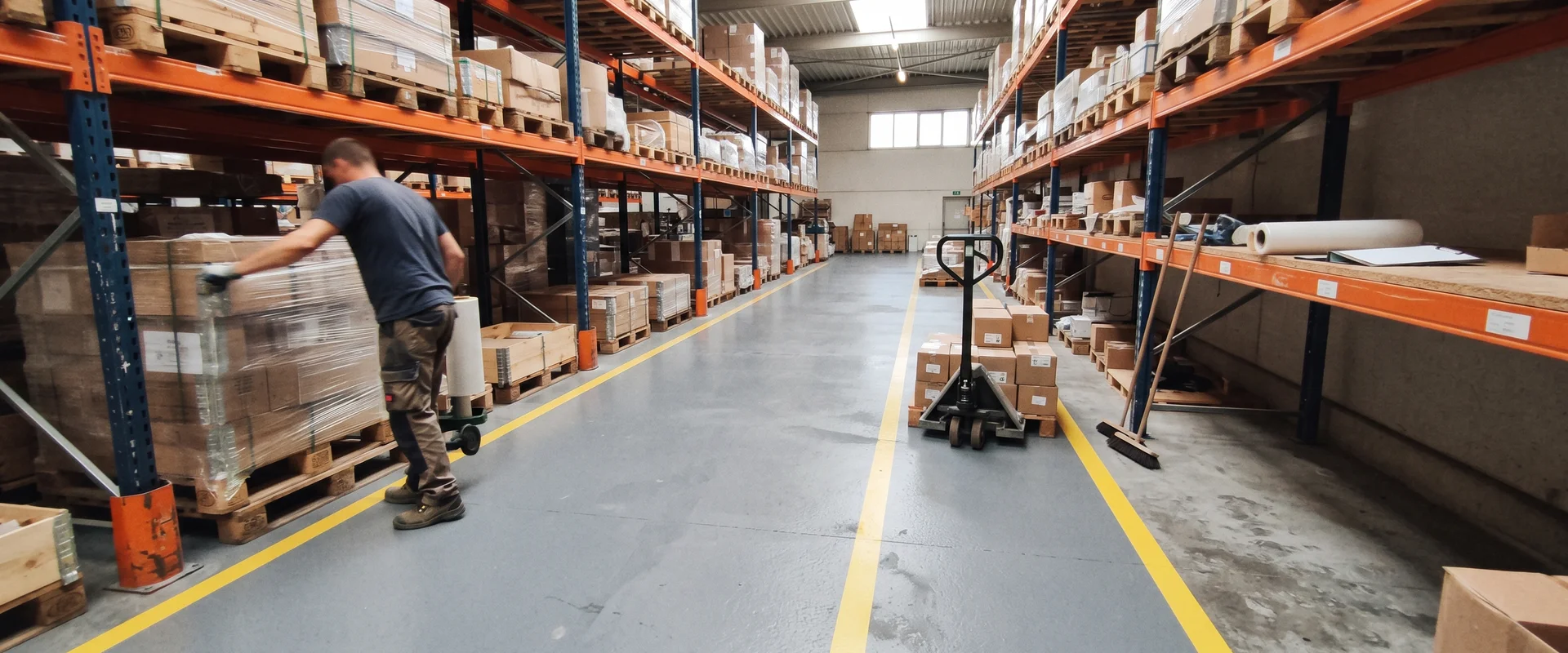
For most Willamette Valley warehouses and light manufacturing floors, a resinous flooring build gives you a hard-wearing, easily cleaned surface with good chemical resistance and enough film thickness to handle forklift traffic. For breweries, food processing, commercial kitchens and anywhere with steam or hot caustic wash-down, cementitious urethane is the answer. Its urethane-and-cement chemistry survives thermal shock that would crack a conventional epoxy off the slab, and it tolerates residual slab moisture that would blister a thin-film system.
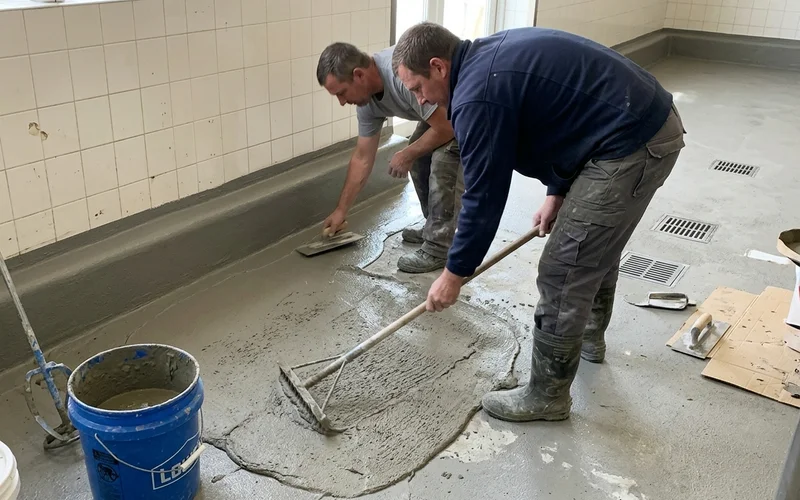
The detailing is where an industrial floor is won or lost. An integral cove base carries the coating up the wall in one continuous piece so there is no floor-to-wall seam for water and bacteria to sit in. Drains get proper terminations with a mechanical key so the edge cannot lift under pressure washing. Anti-slip aggregate, either aluminum oxide or graded quartz, is broadcast into the wet coat and sealed in, letting us dial the coefficient of friction (COF) to whatever your safety program specifies rather than guessing.
| System Type | Best For | Key Benefit |
|---|---|---|
| Cementitious Urethane | Breweries, food processing, commercial kitchens | Survives hot caustic wash-down and thermal shock. |
| Resinous Epoxy Build | Warehouses and light manufacturing | Hard-wearing and easy to clean under forklift traffic. |
| Urethane Mortar (1/4”) | Heavy racking and steel-wheeled carts | Compressive strength above most of the slab beneath it. |
Heavy load resistance comes from thickness and from the slab beneath. A 1/4 inch urethane mortar has compressive strength above most of the concrete it is installed over, which means point loading from racking legs and steel-wheeled carts transfers through without crushing the coating. Where the substrate itself is failing, we say so and repair it first.
For facilities operating under USDA/FDA compliance expectations, we build with those requirements in mind: seamless surfaces, no open joints, cove base at every wall junction, and a finish that cleans down rather than trapping residue.
What’s Included
- Full site assessment covering chemical, thermal and load exposure
- Mechanical prep by diamond grinding or shot blasting
- Control joint routing and semi-rigid joint filling
- Spall, pit and edge repair before the build coats
- Cementitious urethane or resinous system at the specified thickness
- Integral hygienic cove base and drain detailing
- Anti-slip aggregate broadcast to your required traction level
- Aisle marking and safety striping under the topcoat where required
Common Problems We Solve
Coatings That Peel After a Wash-Down Cycle
Standard epoxy is rigid and has a different thermal expansion rate to concrete. Run hot water over it and the coating and slab move against each other until the bond gives. Cementitious urethane is formulated to move with the slab through those temperature swings.
Joint Edges Chipping Under Forklifts
Once a control joint edge starts to spall, every wheel that crosses it makes it worse and the damage spreads down the line. Routing and filling with a semi-rigid filler supports both joint edges so the wheel rolls across rather than dropping into a gap.
Slippery Floors in Wet Processing Areas
Wet floors plus smooth coatings is how injury claims start. Broadcasting graded aggregate into the coating gives a measurable, specifiable traction level that stays in place because it is locked into the resin rather than sitting on top of it.
Dusting Slabs Contaminating Product
Bare or worn industrial concrete sheds fine dust continuously, which is a genuine problem in food, electronics and coatings facilities. A sealed resinous surface eliminates the source. On a sound slab with no chemical or thermal exposure, polished concrete solves the same dusting problem with no film to maintain at all.
Scheduling Around Your Operation
The floor is rarely the hard part. Getting it installed without costing you production is. We plan sectional installs so half an aisle stays live, work nights and weekends when that is the cheaper trade, and select faster-curing chemistry when the shutdown window is genuinely tight. You get the schedule in writing with the quote, including when each area returns to foot traffic and when it takes full wheel loads.
Serving industrial and commercial facilities in Eugene, Springfield, Junction City, Cottage Grove and across the Willamette Valley.